The Heart Sutra 心经
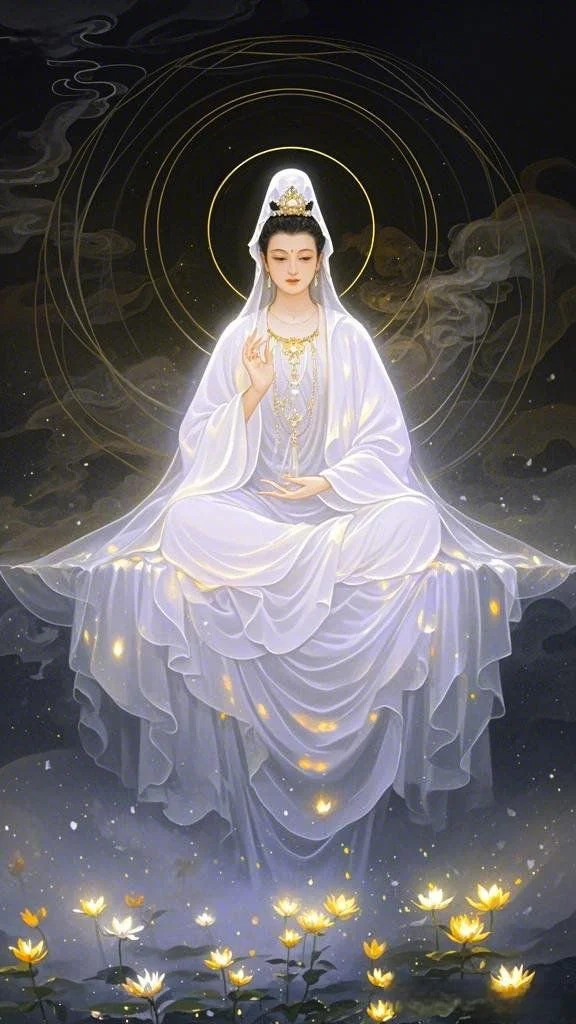
Bodhisattva Guanyin (Guanzizai), also known as Avalokitesvara
The Heart Sutra (Sanskrit: Prajñāpāramitā Hṛdaya) is one of the most well-known and widely recited sutras in Mahayana Buddhism.
Despite its short length—often just a single page—it contains the essence of the entire Prajñāpāramitā (Perfection of Wisdom) teachings, which span hundreds of volumes.
At the heart of the sutra is the profound insight into emptiness (śūnyatā)—the understanding that all phenomena lack independent, inherent existence.
It begins with Avalokiteśvara (Guanzizai or Guanyin Bodhisattva) contemplating deeply and realizing:
“The five aggregates are empty, thus transcending all suffering.”
This is not a philosophical idea alone, but a direct experiential wisdom that liberates beings from suffering.
The Heart Sutra is treasured because it offers:
A direct path to wisdom
A way to cut through attachment and illusion
A teaching that is both profound and practical
The key teaching of the Heart Sutra is that: the nature of all dharmas is emptiness. If we can perceive the nature of dharmas is emptiness - to know that all things all phenomena lack of this independent, inherent self, to perceive things as they truly are without attachment (as all things are constantly changing without a permenant fixed self-nature), then all suffering can be transcended.
~
Sutra Opening Verse
Namo Fundamental Teacher Shakyamuni Buddha (*three times)
The Unsurpassed, Profound, Subtle and Wondrous dharma
Is difficult to encounter in hundreds of millions of kalpas
I now see and hear it, receive and uphold it,
May we understand the true meaning of the Tathagata.
~
观自在菩萨,行深般若波罗蜜多时,照见五蕴皆空,度一切苦厄。
Guanzizai (Avalokitesvara) Bodhisattva,
While dwelling deeply in the practice of Prajñāpāramitā,
Clearly saw that all the five skandhas (1) are empty,
thus transcending all suffering and distress.
舍利子,色不异空,空不异色,色即是空,空即是色,受想行识亦复如是。
Sariputra, form is no different from emptiness,
Emptiness is no different from form.
Form is emptiness,
Emptiness is form.
The same is true for feelings, perceptions,
volitional formations and consciousness.
舍利子,是诸法空相,不生不灭,不垢不净,不增不减。
Sariputra, the nature of all dharmas is emptiness.
No arising, no ceasing;
No impurity, no purity;
No increase, no decrease.
是故空中无色,无受想行识,无眼耳鼻舌身意,无色声香味触法,
Thus, in emptiness there is no form,
No feelings, no perceptions, no volitional formations, or consciousness;
No eyes, ears, nose, tongue, body, or mind;
No form, sound, smell, taste, touch, or dharmas.
无眼界乃至无意识界,无无明亦无无明尽,乃至无老死,亦无老死尽,
No realm of the eye, up to no realm of the consciousness,
No ignorance and also no ending of ignorance,
up to no aging and death,
and also no ending of aging and death.
无苦集灭道,
No suffering, no cause of suffering,
No cessation of suffering, and no path.
无智亦无得。以无所得故,菩提萨埵。依般若波罗蜜多故,心无挂碍;无挂碍故,无有恐怖,远离颠倒梦想,究竟涅槃。
No wisdom, and no attainment.
Because there is nothing to attain,
The Bodhisattvas, relying on Prajñāpāramitā,
Have no hindrance in their heart,
No hindrance and therefore no fears.
Away from all deluded dreams,
They realise the Ultimate Nirvana.
三世诸佛,依般若波罗蜜多故,得阿耨多罗三藐三菩提。
All Buddhas of the three times,
relying on Prajñāpāramitā,
attain Anuttarā-samyak-sambodhi (2).
故知般若波罗蜜多,是大神咒,是大明咒,是无上咒,是无等等咒,能除一切苦,真实不虚。
Therefore, one should know that the Prajñāpāramitā is
a great divine mantra, a great bright mantra,
the ultimate supreme mantra,
the ultimate unparalleled mantra,
Capable of eliminating all suffering,
It is true and not false.
故说般若波罗蜜多咒,即说咒曰:揭谛揭谛 波罗揭谛 波罗僧揭谛 菩提萨婆诃。
Thus, one recites the Prajñāpāramitā mantra like this:
Gate gate pāragate pārasaṃgate bodhi svāhā!
Footnote (1): the five skandhas (or the five aggregates): the five constantly changing mental and physical components that comprise personal experience. They are (1) form, (2), feelings, (3), perceptions, (4) volitional formations, and (5) consciousness.
Footnote (2): Anuttarā-samyak-sambodhi: Unsurpassed, Equal and Perfect Enlightenment, i.e. Buddhahood.
~
You can download a bilingual (Chinese & English) pdf here.
You can download a bilingual (Sanskrit & English) pdf here.
You can listen to the sanskrit audio recitation here.