THE MAHAMANGALA SUTTA 吉祥经
Introduction
The word "mangala" means "blessing," "auspicious sign" or "good omen." In ancient India, people wanted to know what constituted a real blessing that would make life happy for them. This issue was even raised among deities (devas) in the heavenly planes. For twelve years the deities argued, debated and discussed this. Some referred to a "blessing" as what is pleasurable to the senses - things that are pleasing to the eyes, ears, nose, tongue and body. However, no satisfactory answer could be obtained. Then, devas of the Trāyastriṃśa heavenly realm approached Śakra, the leader of the devas, for his opinion. Śakra advised the devas to consult the Buddha. Thus, in the middle of the night, a certain deity of surpassing splendour came to visit the Buddha in Jeta’s Grove of Anāthapiṇḍada’s Monastery, near Śrāvastī. He asked the Buddha about the true meaning of "blessing". In response, the Buddha delivered a discourse known as the Mangala Sutta, in which thirty-eight highest blessings were enumerated.
The Mangala Sutta is customarily chanted for blessings on auspicious occasions. Besides, these thirty-eight blessings are ethical and spiritual in nature, providing a step-by-step training on the journey of life. It contains the Buddha’s advice and guidance for the ‘novice’ of life, and ultimately leads one to liberation from suffering.
Namo Amitabha Buddha!
Namo Amituofo!
南无阿弥陀佛!
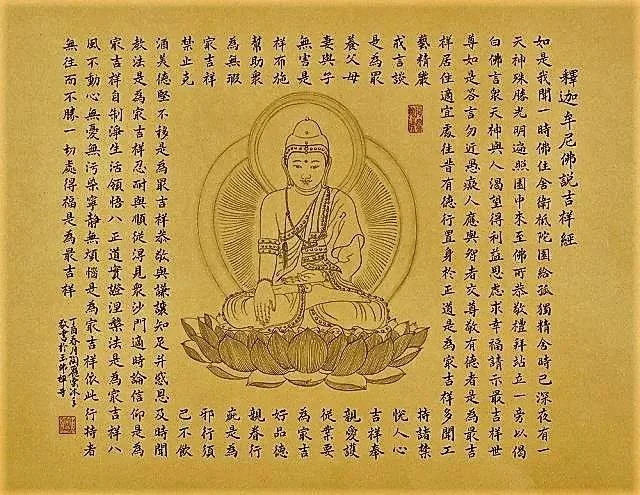
The Mahāmaṅgala Sutta in Chinese 吉祥经
-
南无本师释迦牟尼佛 (三称)
Namo Fundamental Teacher
Shakyamuni Buddha (three times)
南无阿弥陀佛 (三称)
Namo Amitabha Buddha (three times)
开经偈
无上甚深微妙法, 百千万劫难遭遇。
我今见闻得受持, 愿解如来真实义。
Sutra Opening Verse
The unsurpassed, profound, subtle and wondrous Dharma
Is rarely encountered in hundreds of thousands of millions of kalpas.
I now see and hear it, receive and uphold it,
May we understand the true meaning of the Tathagata.
-
吉祥经
THE MAHĀMANGALA SUTTA
Discourse on Blessings
李荣熙译
Based on the translation from Pali to Chinese by Li Rongxi
[Chinese] 如是我闻。
[Pali] Ēvam mē sutam:
[English] Thus have I heard:
一时, 佛住舍卫国祇树给孤独园。
Ēkam samayam Bhagavā Sāvatthiyam viharati Jētavanē Anāthapindikassa ārāmē,
At one time, the Buddha was staying in Jeta’s Grove (Jetavana), Anāthapiṇḍada’s Monastery, near Śrāvastī.
时已夜深, 有一天神, 殊胜光明, 遍照园中, 来至佛所。恭敬礼拜, 站立一旁。
atha kho añnatarā dēvatā abhikkantāya rattiyā abhikkanta vannā kēvalakappam Jētavanam ōbhāsetvā, yēna Bhagavā tēnupasamkami. Upasam kamitvā Bhagavantam abhivādetvā ēkamantam atthāsi.
When the night was dark, a certain deity, whose surpassing radiance illuminated the whole of Jeta’s Grove, came to the Buddha’s place, respectfully saluted him, and stood aside.
以偈白佛言:
Ēkamantam thitā khō sā dēvatā Bhagavantam gāthāya ajjhabhāsi.
He addressed the Buddha in verse:
“众天神与人, 渴望得利益, 思虑求幸福, 请示最吉祥。”
“Bahū dēvā manussā ca— mangalāni acintayum Ā kankhamānā sotthānam — brūhi mangala muttamam.”
“Many deities and men longing for happiness have pondered on (the question of) blessings. Pray tell me what the highest blessings are.”
世尊如是答言: “勿近愚痴人,应与智者交,尊敬有德者,是为最吉祥。”
“Asēvanā ca bālānam — panditānam ca sēvanā Pūjā ca pūjanīyānam — ētam mangala muttamam.
[The Buddha answered him thus:]
“To stay away from the foolish and delusional,
To be close to the wise,
And to respect those worthy of respect (virtuous ones) —
This is the highest blessing.
居住适宜处, 往昔有德行, 置身于正道, 是为最吉祥。
Patirūpa dēsa vāso ca— pubbē ca kata puññatā Atta sammā panidhi ca— ētam mangala muttamam.
To reside in a suitable locality,
To have performed meritorious actions in the past,
And to set oneself on the right path —
This is the highest blessing.
多闻工艺精, 严持诸禁戒, 言谈悦人心, 是为最吉祥。
Bāhu saccam ca sippan ca — vinayo ca susikkhito Subhāsitā ca yā vācā — ētam mangala muttamam.
To be widely learned and to be skilled in one’s craft,
To be well-grounded in the precepts,
And to be of skilful, beneficial, and pleasant speech (1) —
This is the highest blessing.
奉养父母亲, 爱护妻与子, 从业要无害, 是为最吉祥。
Mātā pitū upatthānam — puttadārassa sangaho Anākulā ca kammantā — ētam mangala muttamam.
To care for and support one’s father and mother,
To cherish one’s spouse and children,
And to engage in work that causes no harm —
This is the highest blessing.
如法行布施,帮助众亲眷,行为无暇疵,是为最吉祥。
Dānam ca dhamma cariyā ca — ñātakānam ca sangaho Anavajjāni kammāni — ētam mangala muttamam.
To practise generosity and living in accordance with the Dharma,
To help one’s relatives,
And to be blameless in conduct —
This is the highest blessing.
邪行须禁止, 克己不饮酒, 于法不放逸, 是为最吉祥。
Ārati virati pāpā — majjapānā ca saññamo Appamādō ca dhammēsu — ētam mangala muttamam.
To abstain from unwholesome conduct,
To abstain from intoxicants,
And to be diligent in practising the Dharma —
This is the highest blessing.
恭敬与谦让, 知足并感恩, 及时闻教法, 是为最吉祥。
Gāravō ca nivātō ca — santutth ca kataññutā Kālēna dhamma savanam — ētam mangala muttamam.
To be reverent and humble,
Content and grateful,
And to listen to the Dharma at the proper time —
This is the highest blessing.
忍耐与柔和, 得见众沙门, 适时论信仰, 是为最吉祥。
Khant ca sōvacassatā — samanānam ca dassanam Kālēna dhamma sākacchā — ētam mangala muttamam.
To be patient and receptive [to guidance],
To meet the Shramanas (monks),
And to have timely discussions on the Dharma —
This is the highest blessing.
自制净生活, 领悟于圣谛, 实证涅槃法, 是为最吉祥。
Tapō ca brahma cariyam ca— ariya saccā na dassanam Nibbāna sacchi kiriyā ca— ētam mangala muttamam.
To have self-restraint and live a pure life,
To gain insight into the Noble Truths,
And to realize Nirvana —
This is the highest blessing.
八风不动心, 无忧无污染, 宁静无烦恼, 是为最吉祥。
Phutthassa lōka dhammēhi— cittam yassa na kampati Asōkam virajam khēmam— ētam mangala muttamam.
A mind that is unmoved by the eight winds of life (2),
Free from sorrow and defilements,
Peaceful and free from worries —
This is the highest blessing.
依此行持者, 无往而不胜, 一切处得福, 是为最吉祥。”
Ētādisāni katvāna — sabbatha maparājitā Sabbhattha sotthim gacchanti tam tēsam mangala muttamanti. ”
Those who follow this practice will be invincible everywhere and blessed everywhere — these are the highest blessings. "
-
往生咒 (拔一切业障根本得生净土陀罗尼)
Rebirth Mantra
(The Dharani for Removing the Roots of All Karmic
Obstacles and Attaining Rebirth in the Pure Land)
南无阿弥多婆夜 哆他伽多夜 哆地夜他 阿弥利都婆毗
阿弥利哆 悉耽婆毗
阿弥唎哆 毗迦兰帝
阿弥唎哆 毗迦兰多
伽弥腻 伽伽那 枳多迦利 娑婆诃
Romanized Sanskrit:
namo amitābhāya tathāgatāya
tadyathā amṛtod-bhave
amṛta-siddhaṃ bhave
amṛta-vikrānte
amṛta-vikrānta
gāmine gagana kīrta-kare svāhā
English:
Adoration to the Exalted one of Infinite Light
namely: Oh! Nectar-producing one!
Nectar-creation-perfecting one!
Nectar-miracle one!
(he) performs miracle with nectar,
he makes (nectar) glory in sky,
All Hail!
赞佛偈
In Praise of Amitabha
阿弥陀佛身金色,相好光明无等伦。
白毫宛转五须弥,绀目澄清四大海。
光中化佛无数亿,化菩萨众亦无边。
四十八愿度众生,九品咸令登彼岸。
Amitabha Buddha's body is golden in hue,
His marks and radiance are beyond compare.
The urna between his brows coils like five Sumerus,
His deep blue eyes are as clear as the four great oceans.
Within his light appear countless transformation Buddhas,
And innumerable Bodhisattvas manifest as well.
With forty-eight great vows he rescues all sentient beings,
Leading them to the other shore through the Nine Grades of Rebirth.
Namo Great Compassionate and Merciful Amitabha
Buddha of the Western Pure Land of Ultimate Bliss
三皈依
The Three Refuges
自皈依佛,当愿众生,体解大道,发无上心。
自皈依法,当愿众生,深入经藏,智慧如海。
自皈依僧,当愿众生,统理大众,一切无碍,和南圣众。
I take refuge in the Buddha.
May all sentient beings understand the Great Path
and generate unsurpassed Bodhicitta.
I take refuge in the Dharma.
May all sentient beings deeply enter into the treasury of scriptures,
and have wisdom vast as the ocean.
I take refuge in the Sangha.
May all sentient beings guide the masses without obstacles,
and pay homage to the assembly of sages.
普贤菩萨十大愿
The Ten Great Practices and Vows of Samantabhadra Bodhisattva
一者礼敬诸佛。二者称赞如来。三者广修供养。四者忏悔业
障。五者随喜功德。六者请转法轮。七者请佛住世。八者常随
佛学。九者恒顺众生。十者普皆回向。
First, to pay homage to all Buddhas;
Second, to praise the Tathagatas;
Third, to extensively cultivate making offerings;
Fourth, to repent of karmic obstacles;
Fifth, to rejoice in others’ merit;
Sixth, to request the turning of the Dharma Wheel;
Seventh, to invite the Buddhas to remain in the world;
Eighth, to constantly follow and learn from the Buddhas;
Ninth, to constantly accord with living beings;
Tenth, to universally transfer all merit.
功德回向
Merit Transfer
愿生西方净土中
九品莲花为父母
花开见佛悟无生
不退菩萨为伴侣
May we be born in the Western Pure Land,
Have the nine grade lotuses as our parents.
When the lotuses open, we will see the Buddha
and realise the truth of non-arising,
With Non-regressing Bodhisattvas as our companions.
-
Footnotes:
(1) According to the Buddha, wholesome and blameless speech is speech that is skilful (spoken with wisdom and compassion), beneficial, and pleasant. In the Vācā Sutta, such speech is said by the Buddha to have five factors: it is (1) spoken at the right time, (2) spoken with truth, (3) spoken gently, (4) beneficial, and (5) spoken with a mind of loving-kindness.
(2) the eight winds of life: the eight (changeable) worldly conditions (four favourable and four unfavourable) that can disturb the peace of our minds. They are pleasure and pain; gain and loss; praise and blame; fame and disgrace.
-
You can download a pdf here.